
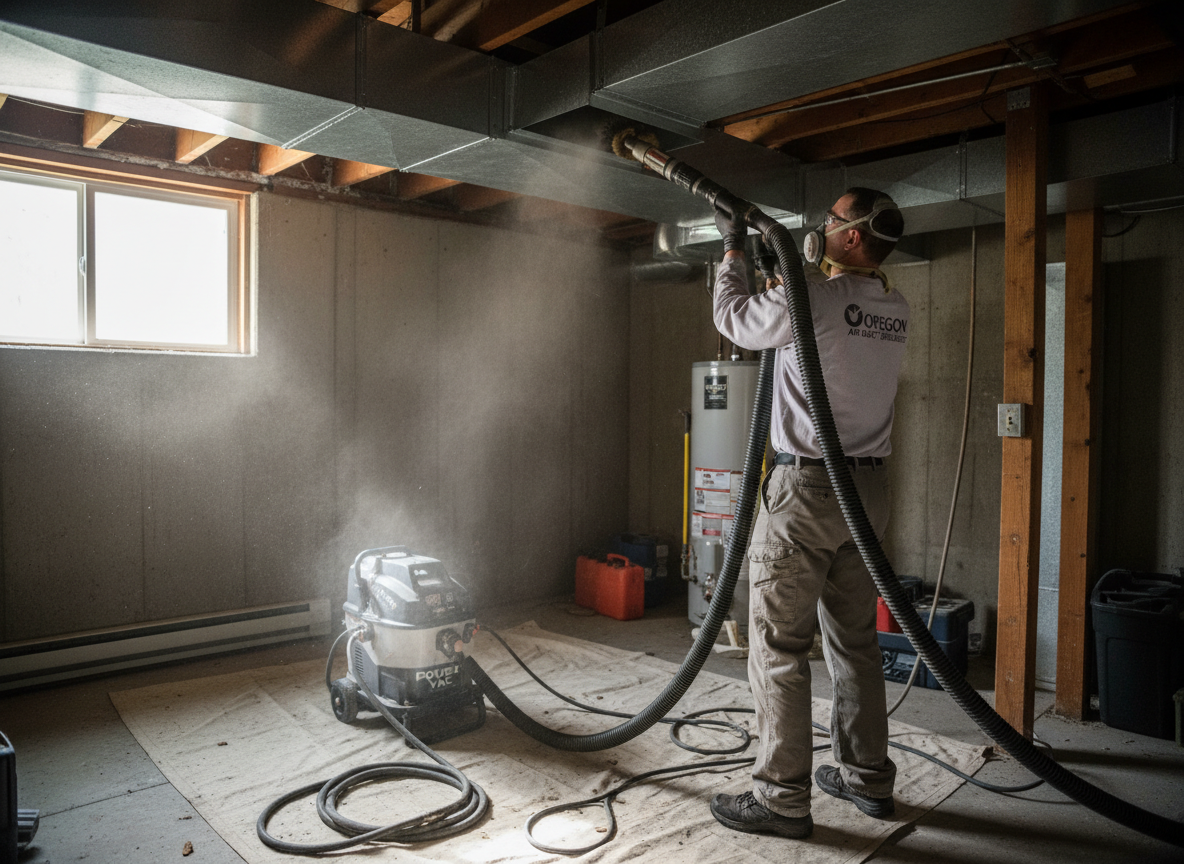
Milwaukie sits in Clackamas County with many homes built between the 1950s and 1970s that still use original sheet-metal duct runs. These systems often collect dust, pet dander, and insulation fibers over decades, especially in crawl-space installations common along the Willamette. When winter rains raise indoor humidity, moisture can settle in low spots of the trunk lines and create conditions for microbial growth that standard furnace filters miss.
PureStream Vent technicians begin every job at 10100 SE Main St by mapping the full supply and return paths, including branches that run into finished basements or knee-wall spaces typical of Oak Grove and Ardenwald properties. We use negative-air machines and rotary brushes sized for residential 6- to 10-inch ducts rather than commercial equipment that can dent older metal. Access panels are cut only where needed and sealed to current SMACNA standards so homeowners can inspect the work afterward.
After the mechanical cleaning, we remove the vacuum equipment and run the furnace on high for several minutes while checking each register for remaining debris. This step reveals hidden blockages in runs that cross under additions or garages, which are frequent in Milwaukie’s older stock. Homeowners receive a written summary noting any damaged flex sections or missing insulation that should be addressed before the next heating season.
Because PureStream Vent operates 24 hours a day, crews can schedule around shift workers in the Portland metro area without forcing residents to take time off. The focus stays on measurable airflow improvement rather than vague promises about air quality.
Technician insight
In Oregon the thing that catches most people out with HVAC duct cleaning is how often rainwater finds its way into crawl-space ducts through poor grading around 1960s Milwaukie homes; once that happens the insulation inside the ducts stays damp for months and standard vacuuming alone will not remove the mold film that forms on the inner walls.
Hidden Moisture in an Oak Grove Crawl Space
A homeowner in Oak Grove noticed weak airflow from several floor registers after the first heavy fall rains. Inspection showed standing water had entered a low section of rigid duct where the crawl-space grade had settled. The crew isolated the wet run, removed the saturated insulation, brushed the metal clean, and installed new sealed insulation before restoring full airflow.
How it works
- 1
Initial System Mapping
Technicians inspect every accessible duct run from the furnace or air handler outward, noting trunk lines, branch take-offs, and any flex sections in crawl spaces or attics common to Clackamas County homes.
- 2
Negative-Air Setup
A HEPA-filtered vacuum is connected to the main trunk while registers are sealed, creating continuous suction that prevents loosened debris from escaping into living spaces.
- 3
Mechanical Agitation
Rotary brushes sized for residential ducts dislodge built-up material without damaging older sheet metal or fiberglass-lined sections found in Milwaukie homes.
- 4
Post-Clean Verification
The system is run at full speed while each register is checked for remaining particles; any missed sections are re-cleaned before equipment is removed.
Pricing
Upfront quotes based on number of runs, access difficulty, and whether the home has flex duct or older rigid metal.