
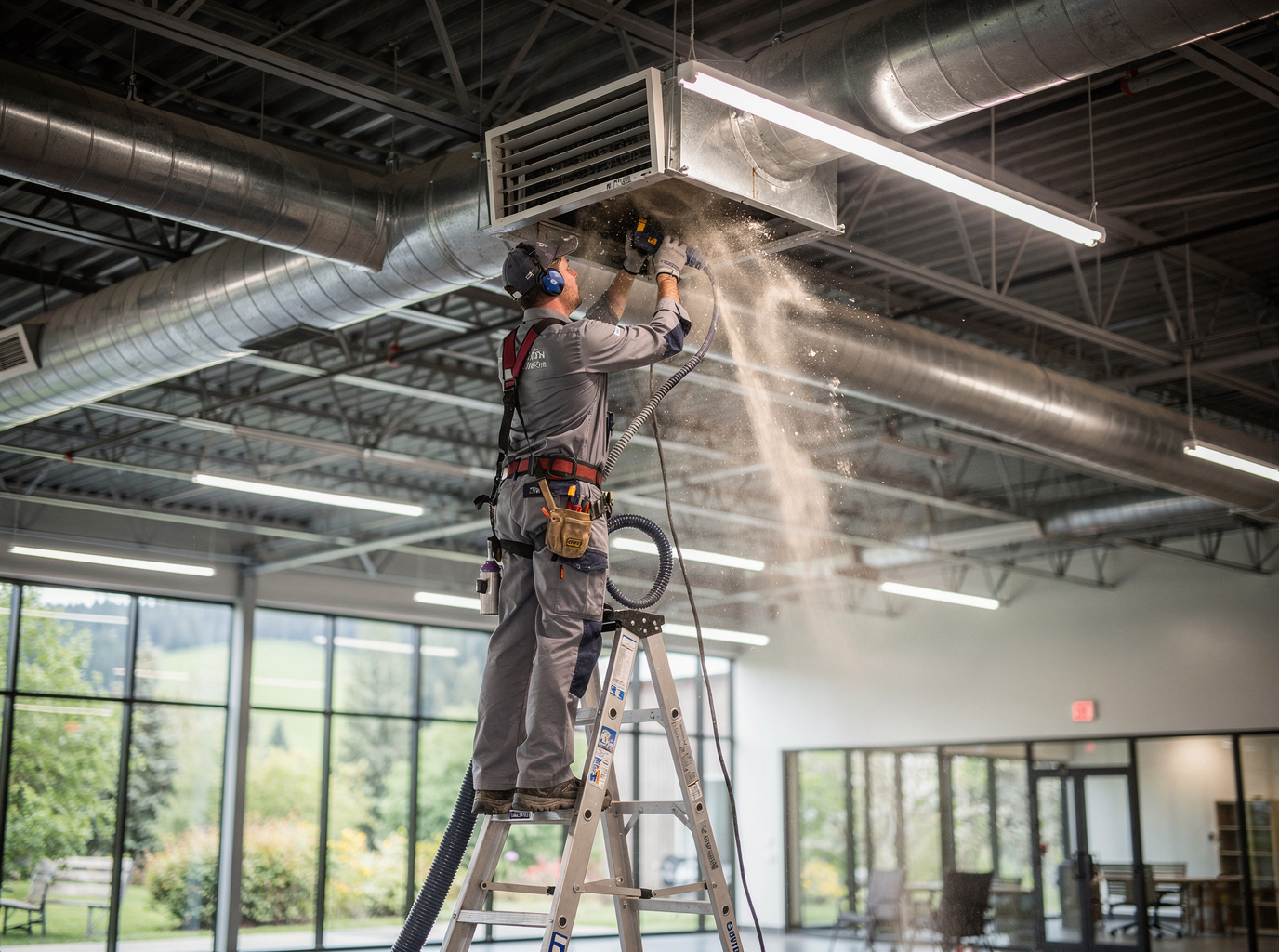
Commercial buildings in Milwaukie and Clackamas County often feature older rooftop units and long trunk lines that accumulate grease, construction dust, and pollen from the surrounding tree cover. These systems run longer hours than residential setups, so restricted airflow raises energy costs and spreads contaminants through open workspaces. Technicians must map each branch before cleaning because many 1970s and 1980s structures still use original flex duct that tears easily under aggressive brushing.
Access panels are frequently missing or sealed behind drop ceilings, requiring careful removal of tiles without disturbing fire-suppression lines common in Oregon commercial properties. Negative-air machines must be positioned on the exterior to avoid pulling construction debris from nearby remodels into the system. Technicians also check for moisture from the area's frequent winter rains that can collect in low-lying horizontal runs and support mold growth inside the ducts.
Code requirements in the Oregon area call for documented cleaning when visible debris exceeds one-eighth inch or when occupant complaints about odors arise. Post-clean verification uses both camera inspection and airflow readings at supply registers to confirm the job meets commercial standards before the system is returned to service.
Technician insight
In Oregon, the thing that catches most people out with Commercial Air Duct Cleaning is how often older Milwaukie retail buildings still run the original rooftop units with flex duct that sags and collects standing water during the long wet season. Homeowners and property managers assume a quick vacuum will handle it, but once that flex tears or mold starts in the low spots you end up replacing whole runs instead of just cleaning them.
Retail Strip Mall in Milwaukie
A clothing store in a 1980s Milwaukie strip mall reported persistent musty odors after heavy winter rains. Inspection showed standing water and mold inside sagging flex duct connected to the rooftop unit. Crews isolated the affected section, removed and replaced the damaged flex, then cleaned the remaining metal trunk lines and verified airflow before reopening the space.
How it works
- 1
Site Assessment
Walk the building in Milwaukie or nearby Clackamas County locations to locate every air handler, trunk line, and return, noting access points and any moisture issues.
- 2
Containment Setup
Place negative-air machines and seal work areas to keep loosened debris from entering occupied commercial spaces during the cleaning.
- 3
Mechanical Cleaning
Use rotary brushes and compressed air tools sized for commercial duct diameters to remove buildup without damaging older sheet metal or flex sections.
- 4
Verification and Documentation
Perform camera inspections and airflow tests, then provide the building manager with before-and-after images and a written report.
Pricing
Commercial pricing depends on number of air handlers, total linear feet of duct, and access difficulty; most Milwaukie jobs receive an on-site quote before work begins.