
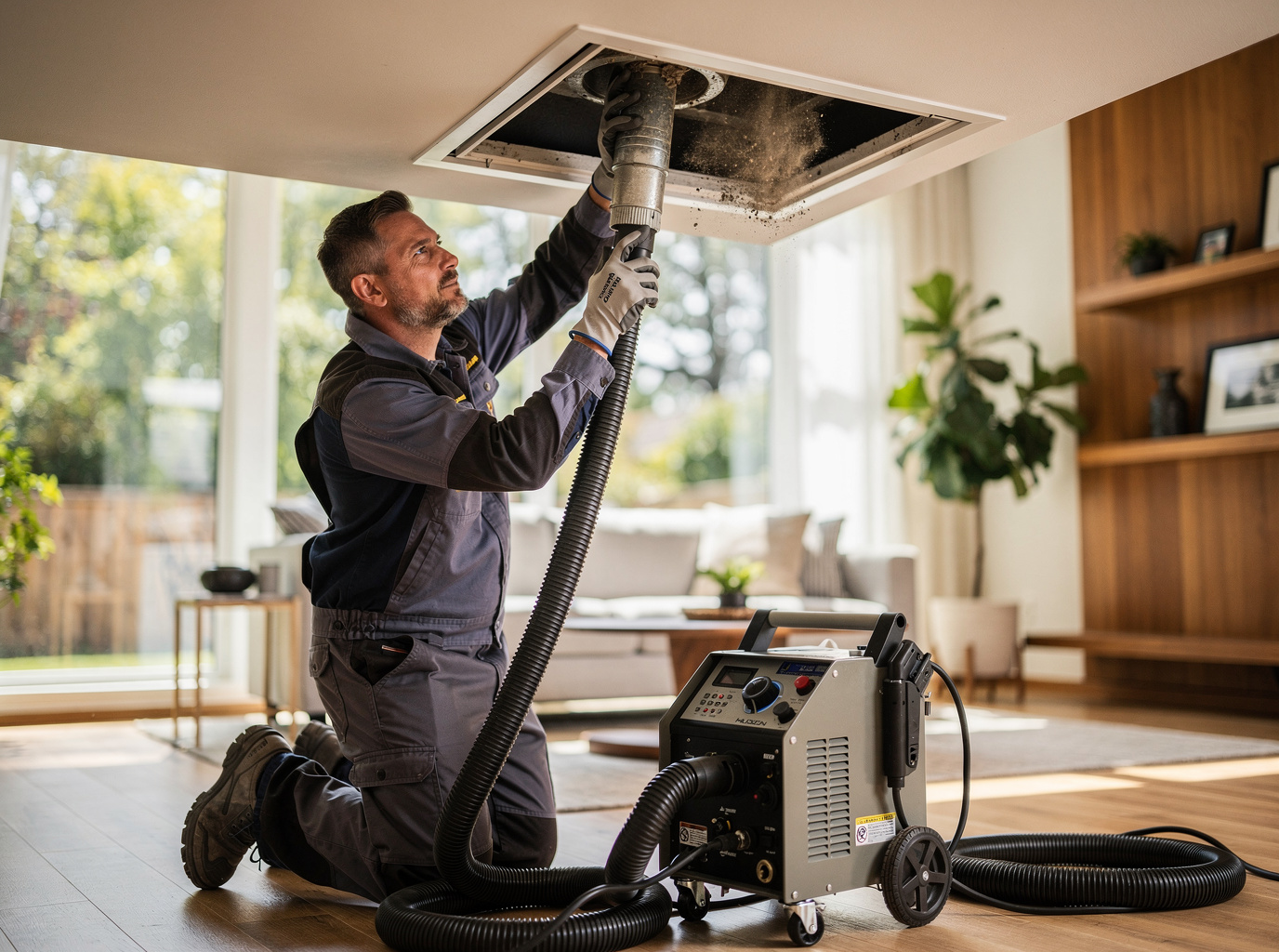
Homes in Milwaukie and nearby Clackamas County neighborhoods like Ardenwald and Sellwood often date to the 1950s and 1960s with original sheet-metal ducts that trap fine Willamette Valley pollen and river-borne dust. Seasonal rains keep relative humidity high for months, allowing mold to colonize inside the duct runs that run through unconditioned crawl spaces or attics. A proper cleaning must reach every branch and the main trunk without dislodging insulation or damaging the original seams that were never designed for modern negative-pressure equipment.
Technicians working these older systems routinely find collapsed flex sections near the furnace that restrict airflow and hide heavy debris loads. Because many Milwaukie properties sit on clay-heavy soils that hold water, basement ducts stay damp longer than in drier parts of Oregon, increasing the chance of microbial growth along the bottom of the trunk line. Removing that material requires source removal rather than simple brushing so the system does not simply redistribute spores once the furnace restarts.
After cleaning, we always check the return-air filter grille and the plenum for gaps that let unfiltered air bypass the media; those gaps are common in homes where the original installer used the cheapest register boots available at the time. Sealing those openings after the ducts are clean prevents the rapid re-accumulation that homeowners notice within a single heating season.
Technician insight
In Oregon the thing that catches most people out with Air Duct Cleaning near me is how the constant winter rain keeps crawl-space ducts damp for months, letting mold take hold inside the seams of 1950s and 1960s homes in Clackamas County neighborhoods like Ardenwald.
Collapsed Flex in Milwaukie Crawl Space
A homeowner in Ardenwald noticed musty air every time the furnace ran. We found two sections of collapsed flex duct lying in standing water under the house. After replacing the damaged runs and cleaning the remaining rigid trunk, airflow improved and the odor disappeared.
How it works
- 1
Inspection and Access
We examine every accessible register, the furnace cabinet, and the main trunk lines to map the layout and identify collapsed or disconnected sections typical in 1960s Milwaukie construction.
- 2
Source Removal
Using negative-air machines and rotary brushes sized for the duct diameter, we pull debris from the inside out rather than pushing it into the furnace or living spaces.
- 3
Sanitizing and Drying
An EPA-registered sanitizer is applied only where moisture evidence exists, followed by forced-air drying to counteract the persistent humidity found under local crawl spaces.
- 4
Final Verification
Each register is checked for restored airflow and the system is run through a full cycle to confirm no new debris is present before we leave the property.
Pricing
Pricing depends on the number of runs, total linear feet, and whether flex duct replacement is needed; we provide an upfront quote after the on-site inspection.