
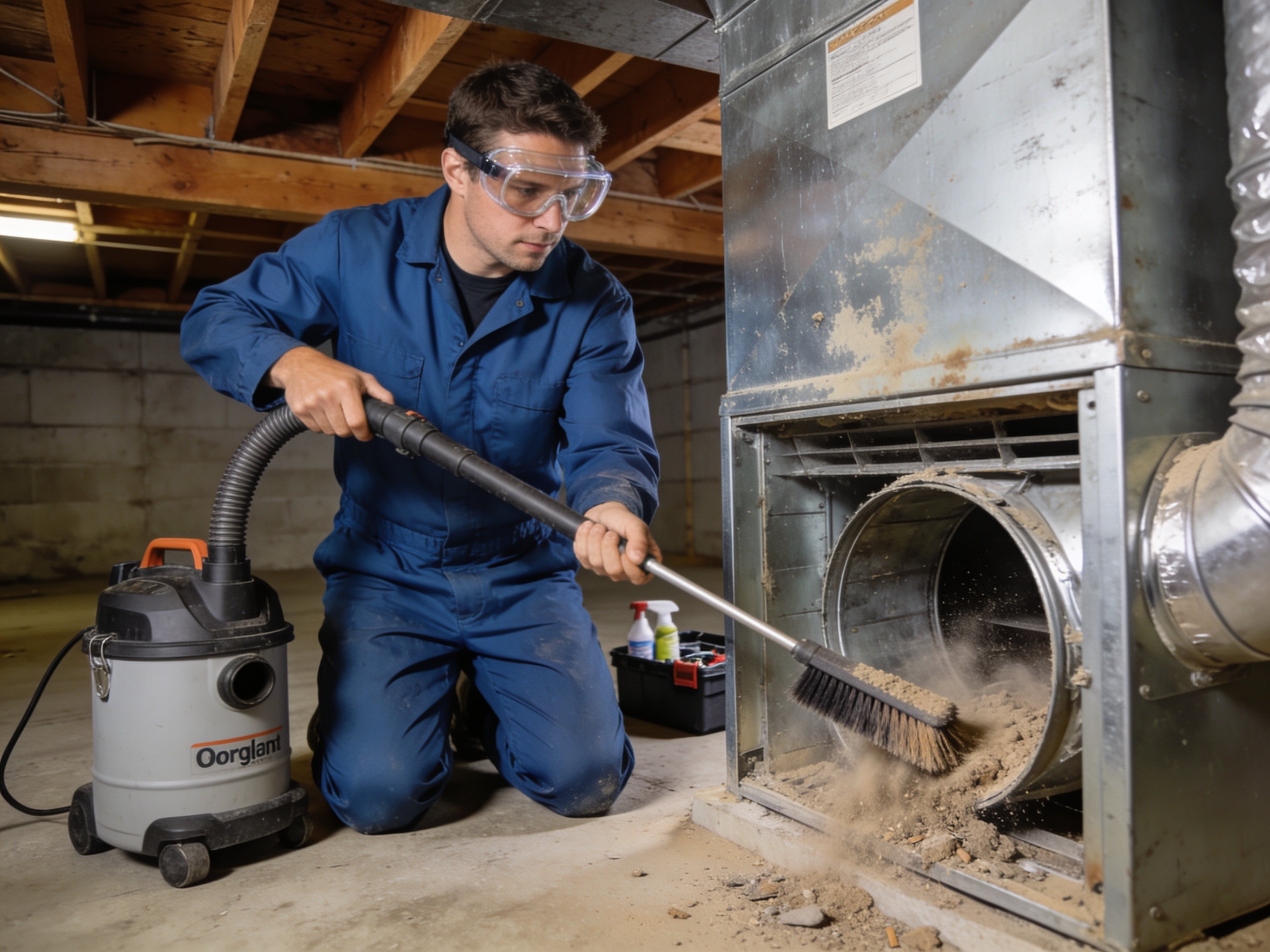
Emergency air duct cleaning in Milwaukie often starts with calls from older neighborhoods where 1960s and 1970s ranch homes have original flex duct runs that trap moisture during extended winter rains. When homeowners notice sudden musty smells or reduced airflow after heavy storms, crews must first isolate affected trunk lines before negative-air machines pull out water-laden debris that standard residential vacuums cannot handle. Failure to address standing condensation quickly allows mold to migrate into wall cavities connected to the return plenum.
Clackamas County properties near the Willamette River experience higher humidity loads than inland areas, so emergency jobs frequently require removing access panels in tight crawl spaces rather than attic work. Technicians check for separated joints where older sheet-metal ducts have shifted on uneven soil, then seal those points after debris removal to prevent future water intrusion. Ignoring these connections during an urgent call can leave hidden pockets that re-contaminate cleaned sections within days.
Response teams based at 10100 SE Main St carry portable HEPA units sized for single-family homes because many Milwaukie blocks lack space for full truck-mounted equipment. They also verify that registers in finished basements are not drawing from damp slab edges, a common source of recurring odors after the first heavy rain of the season. Each job ends with a visual inspection of the furnace blower compartment to confirm no loosened insulation has entered the system.
Technician insight
In Oregon the thing that catches most people out with Emergency Air Duct Cleaning is how quickly winter rain soaks older flex duct in Milwaukie crawl spaces that sit only inches above the water table; once that insulation gets wet it collapses and blocks airflow in ways you cannot see from the registers.
Musty Odor After December Storm
A Milwaukie homeowner noticed strong mildew smells in the living room two days after heavy rain. Inspection showed water had entered a low return duct in the crawl space of the 1972 home and saturated the liner. Crews extracted the moisture, removed the collapsed insulation, and sealed the joint before running the system. Airflow returned to normal and the odor did not return.
How it works
- 1
Initial Assessment
Technician arrives within hours, inspects visible ducts and measures airflow at multiple registers to locate the blockage or moisture source.
- 2
Containment Setup
Negative-air machines and zippered barriers isolate the affected runs so loosened debris does not spread into living spaces.
- 3
Debris and Moisture Removal
Agitation tools and HEPA vacuums clear built-up material while any standing water is extracted from low points in the ductwork.
- 4
Final Verification
Registers are checked again for restored airflow and the system is run through a full cycle to confirm no new odors remain.
Pricing
Emergency calls after normal hours typically cost more than scheduled daytime work because of rapid mobilization and equipment staging.