
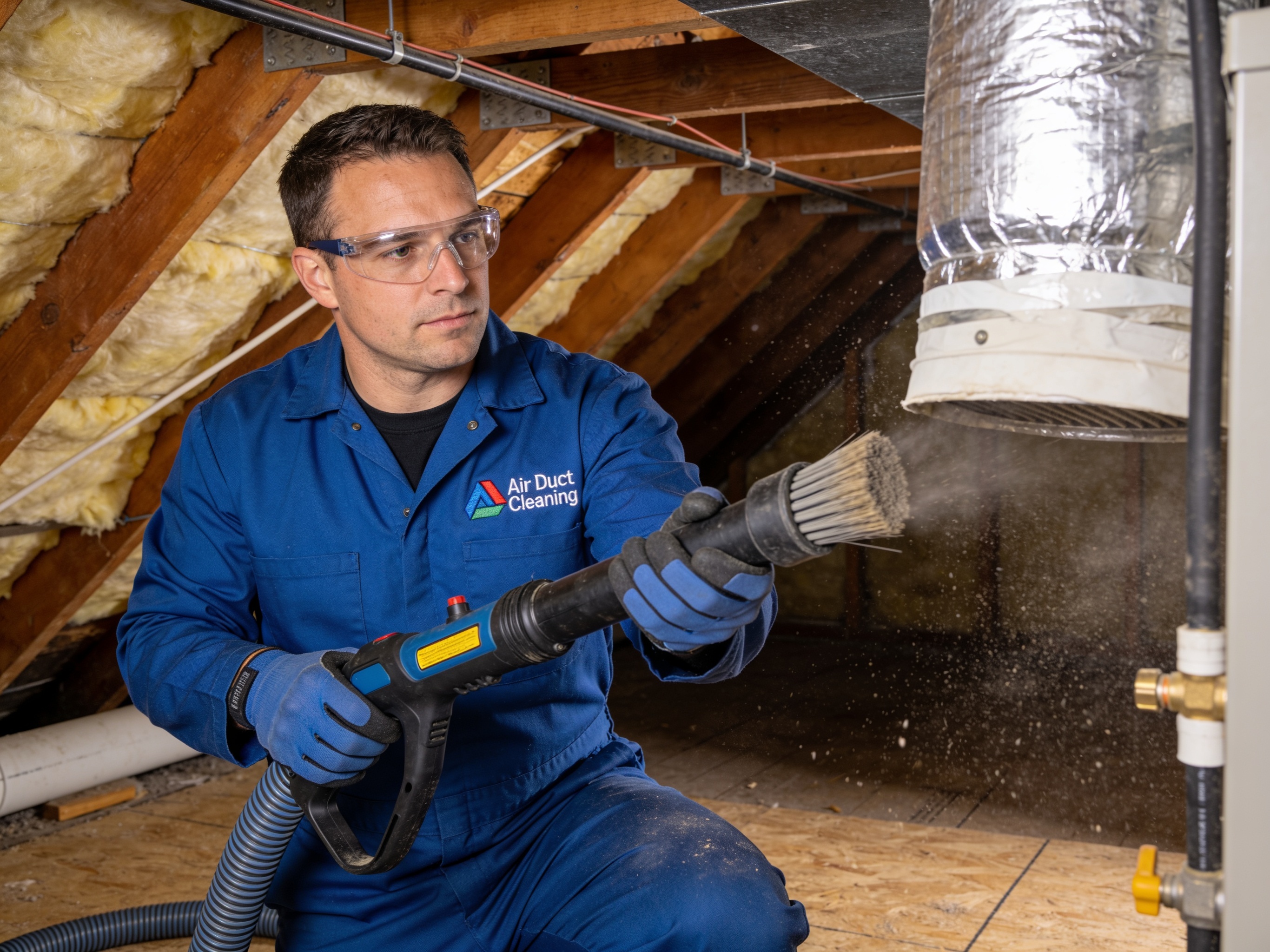
Milwaukie homes built from the 1950s through the 1980s often feature original sheet-metal duct runs that collect fine dust and pollen pushed by the region's frequent rain and wind patterns. When these systems go untouched, airflow drops and indoor air quality suffers, especially in single-story ranches common along SE Main Street and the nearby Johnson Creek corridor. PureStream Vent technicians arrive equipped to handle both flexible and rigid ducts without dismantling walls, using negative-air machines sized for the smaller footprints typical of Clackamas County properties.
Emergency calls frequently come after heavy spring pollen loads or fall leaf debris clogs return vents in two-story homes near the Willamette River. Technicians first map the full trunk and branch layout from the attic or crawlspace access points, then isolate sections to prevent cross-contamination. In older Milwaukie stock, they watch for rusted joints and loose insulation that can tear during aggressive brushing, choosing softer tools and lower static pressure to protect the original materials.
Because the company operates from 10100 SE Main St and answers the phone 24 hours, crews can reach properties in Oak Grove, Gladstone, and Happy Valley the same night a homeowner notices musty odors after a power outage. Every job ends with a visual inspection of the plenum and registers plus a written report noting any damaged sections that should be addressed before the next heating season.
Handling Older Duct Systems
Technicians in the Oregon area routinely encounter mastic-sealed joints that have dried and cracked over decades. They reseal only where access allows and advise homeowners when full replacement makes more sense than repeated cleaning.
Technician insight
In Oregon, the thing that catches most people out with 24/7 Air Duct Cleaning is the original galvanized ducts in Milwaukie ranches built before 1975. Those thin walls dent easily under standard brushes once winter moisture has rusted the seams, so we switch to softer nylon tools and lower vacuum settings the moment we see flexing.
Late-night call after storm
A homeowner in Oak Grove noticed strong musty air after a power outage knocked out the furnace fan. We found leaf debris and standing moisture in the return trunk near the crawlspace entrance. Technicians isolated the wet section, extracted the debris, and dried the metal before resealing two loose joints. The system ran cleanly the next morning with no odor return.
How it works
- 1
Initial Assessment
Arrive on site, review access points, and map the duct layout from attic or crawlspace.
- 2
Isolation and Containment
Set up negative air machines and seal off sections to prevent dust migration into living areas.
- 3
Agitation and Extraction
Use brushes and compressed air tools sized for the duct material, then extract debris with HEPA filtration.
- 4
Final Inspection and Report
Check registers and plenum, document condition, and note any repairs needed for the next season.
Pricing
Upfront quotes based on square footage and number of runs; no hidden fees for after-hours work.