
2026-09-07 · Mike Sullivan
How Milwaukie Homes Handle Wildfire Smoke in Air Ducts
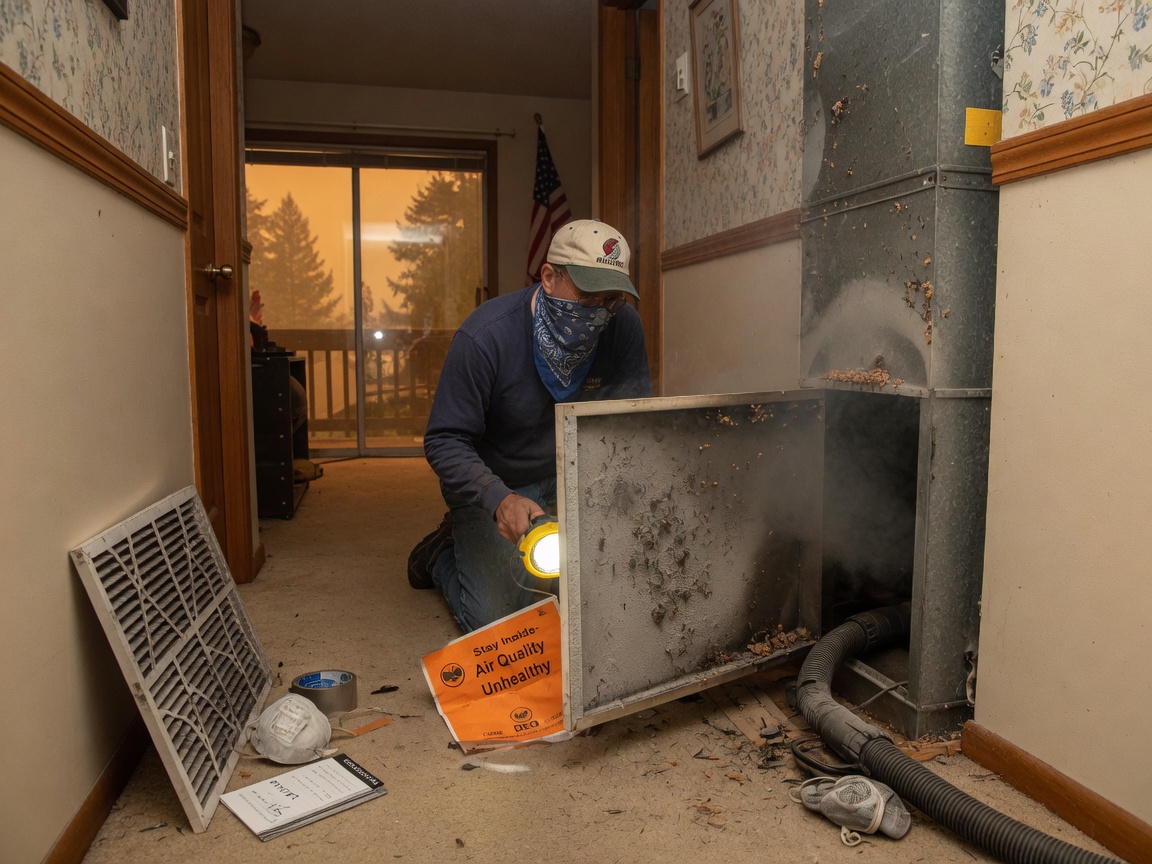
Milwaukie homes handle wildfire smoke in air ducts by upgrading to MERV-13 filters before peak season and scheduling professional cleanings within two weeks after major smoke events from eastern Oregon fires. This approach limits fine particulate retention in ductwork that serves 1950s through 1970s split-level and ranch homes common along SE Main Street and nearby neighborhoods such as Ardenwald and Hector Campbell. Smoke drawn through return vents during August and September east-wind events settles on interior duct surfaces and re-circulates for months without intervention.
Smoke Pathways in Clackamas County Homes
Milwaukie sits in the Portland metro where dry summer air and regional wildfires send smoke plumes across the Willamette River into Clackamas County. Many homes built before 1980 use ductwork routed through unconditioned attics or crawlspaces, allowing smoke to enter via roof vents or foundation gaps during high-wind events. Once inside, particles smaller than 2.5 microns adhere to metal seams and fiberglass insulation lining older trunks. Homeowners notice persistent odors in bedrooms and living areas weeks after outdoor air quality improves because the ducts continue releasing trapped material each time the blower runs. Terrain along Johnson Creek adds humidity swings that cause some particles to clump and drop into lower duct runs near floor registers.
Effects on Typical Milwaukie Housing Stock
Homes in the 97222 zip code often feature 8-inch round branch ducts feeding individual rooms from a central 14-inch trunk, a layout that traps smoke unevenly. Forced-air furnaces installed in basements or garages pull return air from hallways where smoke first enters through open windows or unsealed doors. Over repeated seasons, layers of soot reduce airflow by 15 to 25 percent and force the blower to work harder during cooler months when residents first turn on heat after fall rains arrive. Concrete slab foundations common near the Union Pacific tracks limit access points, so technicians must work from multiple registers rather than a single trunk cleanout. This layout demands longer service times compared with newer homes in Happy Valley or Oregon City.
Seasonal Timing and Weather Patterns
Wildfire smoke reaches Milwaukie most intensely from mid-July through mid-October when dry conditions east of the Cascades combine with prevailing winds. Homeowners who wait until winter to address ducts find that moisture from November rains binds ash into a harder residue that requires more aggressive agitation during cleaning. Running the system with a clean filter for the first 48 hours after a smoke plume passes helps capture fresh particles before they embed. Local temperature inversions that trap smoke near the ground for several days increase the volume of material pulled into return ducts, especially in single-story homes with low rooflines along 42nd Avenue.
Practical Steps for Duct Maintenance
Residents can start by replacing filters every 30 days during active smoke periods using pleated media rated MERV-13 or higher that fits existing slots without bypass. After outdoor AQI readings drop below 50 for three consecutive days, open all registers and run the blower on high for 20 minutes with windows cracked to exhaust loose material. Professional cleaning then removes remaining deposits from the plenum and main trunk using negative-air machines and rotary brushes sized for 6- to 16-inch ducts. Homeowners should document before-and-after photos of interior surfaces to confirm removal of visible soot layers. Scheduling work during shoulder months avoids overlapping with heating or cooling demands that would otherwise stir unsettled particles back into living spaces.